
Did you know that most resumes never even reach a human reader? About 75% get filtered out by Applicant Tracking Systems software that scans for specific keywords before a recruiter ever sees your name.
If you’re a student trying to break into remote global supply chain roles, the words you choose on your resume matter more than you think. The right localized resume keywords for remote global supply chain jobs can be the difference between landing an interview and getting ignored.
By the end of this article, you’ll know exactly which 12 keywords to use, why they work, and how to place them naturally on your resume whether you’re applying to companies in the US, UK, or anywhere else.
Why Keywords Matter So Much in Supply Chain Resumes
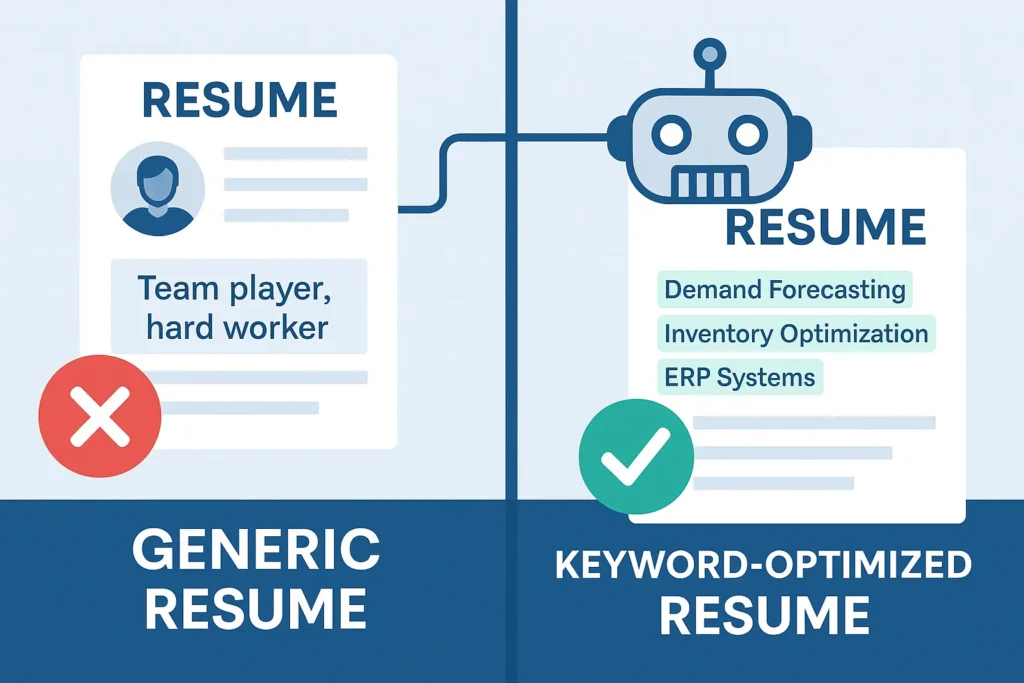
Supply chain is one of the most competitive fields for remote jobs right now. Companies receive hundreds of applications for a single opening. To save time, they use ATS (Applicant Tracking Systems) think of it as a robot gatekeeper.
This software scans your resume for specific terms that match the job description. If your resume doesn’t include those terms, you’re out even if you’re perfectly qualified.
Here’s what most students miss: generic keywords like ‘team player’ or ‘hard worker’ don’t cut it in supply chain. You need industry-specific, role-specific language.
I’ve reviewed dozens of student resumes, and the most common problem I see is using vague language where precise supply chain terminology should be. A hiring manager in logistics knows exactly what ‘demand forecasting’ or ‘freight procurement’ means. Use their language.
READ MORE : Select Top 12 Skill Density Metrics to Include on a Software Engineer Resume
What Are Localized Resume Keywords And Why Do They Matter for Remote Roles?
Localized keywords are terms that match the specific language used in your target market. The US and UK supply chain industries use slightly different terminology and remote employers notice.
For example, US companies say ‘inventory management’ while some UK firms say ‘stock control.’ US roles list ‘freight forwarding’ while UK postings might say ‘goods in transit coordination.’
| Quick Note: Using localized keywords signals to a recruiter that you understand their market. It builds instant credibility even as a student with limited experience. |
For remote global supply chain roles, you’ll often need a mix of both US and UK terms. Many global companies operate across both regions, so showing fluency in both vocabularies gives you a real edge.
The Top 12 Localized Resume Keywords for Remote Global Supply Chain Jobs
Here’s a breakdown of the 12 most impactful keywords with context on where each one fits and how to use it.
| Keyword | Region Focus | Where to Use It |
|---|---|---|
| Demand Forecasting | USGlobal | Skills, Experience bullets |
| Inventory Optimization | USUK | Summary, Skills |
| Procurement Management | USUK | Job titles, Experience |
| Vendor Relationship Management | USUK | Skills, Achievements |
| Logistics Coordination | USUK | Experience, Summary |
| Supply Chain Visibility | GlobalRemote | Summary, Skills |
| Stock Control | UK | Skills (for UK roles) |
| End-to-End Supply Chain | Global | Summary, Objective |
| ERP Systems (SAP, Oracle) | USUK | Skills section |
| Order Fulfilment | UKGlobal | Experience bullets |
| Cross-functional Collaboration | USGlobal | Summary, Achievements |
| Last-Mile Delivery | USUKGlobal | Experience, Projects |
Breaking Down Each Keyword With Real Examples
1. Demand Forecasting
This term shows up in nearly every mid-to-senior supply chain job description. It means predicting future demand for products based on data, trends, and market patterns.
How to use it: ‘Supported demand forecasting processes using historical sales data to reduce overstock by 12%.’ Even a university project can work here.
| Pro Tip: If you used Excel or any software to predict trends in a class project, that counts as demand forecasting experience. Be specific about the tool. |
2. Inventory Optimization
Both US and UK employers love this one. It means keeping stock levels efficient not too much, not too little.
How to use it: ‘Applied inventory optimization techniques during an internship, reducing carrying costs by identifying slow-moving SKUs.’
3. Procurement Management
Procurement is the process of sourcing and buying goods or services for a company. Management signals you understand the full cycle not just placing orders.
How to use it: ‘Assisted in procurement management tasks including supplier evaluation and purchase order tracking.’
4. Vendor Relationship Management
Remote supply chain roles heavily depend on managing suppliers and vendors without ever meeting in person. This keyword tells employers you can do that.
How to use it: ‘Supported vendor relationship management by preparing supplier performance scorecards and following up on delivery timelines.’
5. Logistics Coordination
This is a broad but powerful term. It covers the planning and execution of moving goods from point A to point B across cities, countries, or continents.
How to use it: ‘Assisted logistics coordination team in tracking shipments and resolving delays through proactive communication with freight partners.’
6. Supply Chain Visibility
This is a hot keyword right now, especially for remote global roles. It refers to having real-time insight into every stage of the supply chain.
How to use it: ‘Contributed to improving supply chain visibility by maintaining up-to-date shipment tracking dashboards for senior management.’
| Common Mistake: Don’t just list ‘supply chain visibility’ without context. Show HOW you contributed even in a small way. |
7. Stock Control (UK-Specific)
If you’re applying for UK-based remote roles, swap ‘inventory management’ for ‘stock control’ where appropriate. UK employers use this term far more than US ones.
How to use it: ‘Managed stock control procedures for warehouse pilot project, ensuring accurate recording in inventory system.’
8. End-to-End Supply Chain
This phrase shows you understand the full picture from sourcing raw materials to delivering the final product to the customer. Employers love seeing this in summaries.
How to use it in your resume summary: ‘Supply chain graduate with foundational knowledge of end-to-end supply chain operations including procurement, logistics, and fulfilment.’
9. ERP Systems (SAP, Oracle)
ERP stands for Enterprise Resource Planning. These are the big software systems companies use to manage supply chains. SAP and Oracle are the most common ones.
Even basic familiarity counts. If your university used any ERP software — list it.
How to use it: ‘Familiar with ERP systems including SAP basics, gained through coursework and self-directed learning.’
10. Order Fulfilment
Note the UK spelling: ‘fulfilment’ (one ‘l’) vs. the US spelling: ‘fulfillment’ (two ‘l’s). For UK applications, use the UK spelling. Small detail big signal.
How to use it: ‘Supported order fulfilment operations during a part-time retail role, managing picking, packing, and dispatch processes.’
11. Cross-functional Collaboration
Remote supply chain work means coordinating with teams you’ve never met face to face. This keyword tells employers you can handle that.
How to use it: ‘Demonstrated cross-functional collaboration skills by working with procurement, warehouse, and finance teams on a university supply chain simulation.’
12. Last-Mile Delivery
This refers to the final step of the delivery process getting goods to the end customer. It’s a huge focus for e-commerce and global logistics companies right now.
How to use it: ‘Researched last-mile delivery challenges for a final-year dissertation, analyzing cost-reduction strategies used by top UK and US retailers.’
Build a Job-Ready Supply Chain Resume Right Now
Knowing the right keywords is step one. Putting them together into a polished, professional resume is step two.
If you’re not sure how to structure your resume or you want to make sure your keywords are placed correctly try the Jobzsia CV Builder. It’s designed to help students and early-career professionals create ATS-friendly resumes fast.
You can get started here: Jobzsia CV Builder
It takes the guesswork out of formatting, so you can focus on telling your story with the right words.
How to Use These Keywords Without Sounding Robotic
Stuffing keywords randomly into your resume is actually worse than not using them at all. ATS systems are smarter now they check context, not just presence.
Here’s a simple 3-step approach that works:
- Read the job description carefully. Highlight every supply chain term you see.
- Match those terms to your real experience even projects, internships, or coursework.
- Write achievement-based bullet points that include the keyword naturally. Use numbers when you can.
A weak bullet point: ‘Worked on supply chain projects.’
A strong bullet point: ‘Applied demand forecasting principles in a university simulation project, reducing hypothetical overstock by 18% over a 3-month period.’
See the difference? The second one is specific, measurable, and uses a keyword naturally.
| Pro Tip: Tailor your resume for each application. A 15-minute keyword swap for each job can increase your callback rate significantly studies in recruitment suggest tailored resumes get 40% more interviews than generic ones. |
US vs UK Key Differences in Supply Chain Keyword Language
If you’re open to remote roles in both markets, you’ll want to know these differences:
| US Terminology | UK Equivalent |
| Inventory Management | Stock Control |
| Fulfillment Center | Fulfilment Centre |
| Transportation Management | Freight & Logistics Management |
| Accounts Payable / Receivable | Purchase Ledger / Sales Ledger |
| Purchase Order | Purchase Order (same but often abbreviated as P.O in UK) |
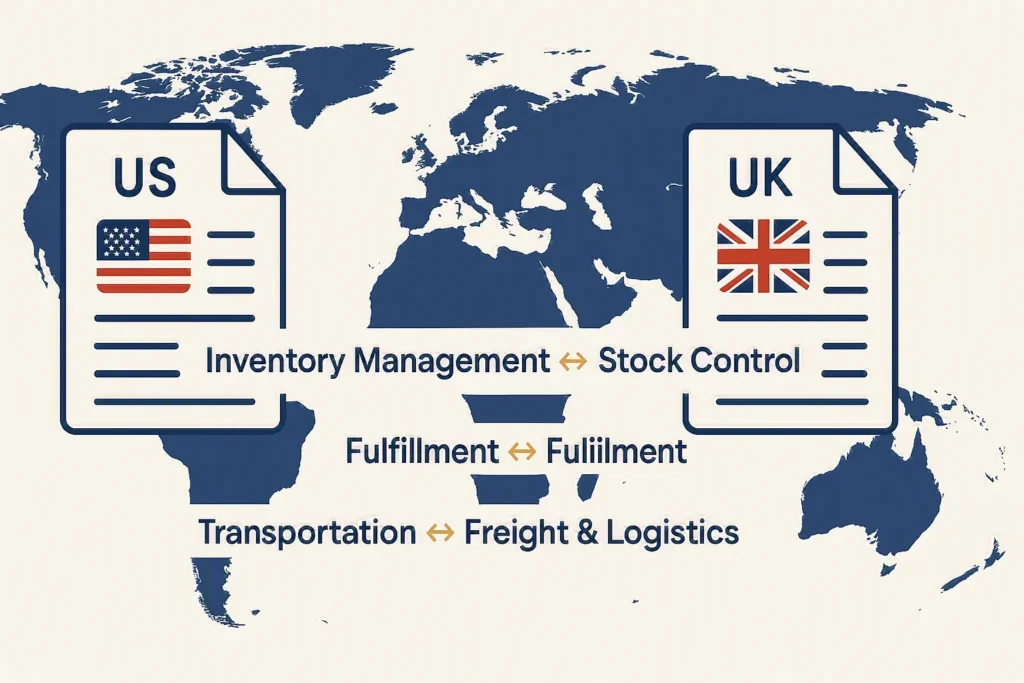
For fully remote global roles, use both sets of terms in your resume where relevant. Many multinationals hiring remotely search for candidates who understand both markets.
ALSO READ OUR GUIDE ON : Top 12 Fractional Executive Resume Rules for Contract Roles
Frequently Asked Questions
What are the best keywords for a supply chain resume?
The best keywords match the specific job description. That said, universally strong supply chain resume keywords include: demand forecasting, procurement management, logistics coordination, inventory optimization, and ERP systems (SAP, Oracle). Always tailor them to each application.
How do I know which keywords to use for remote jobs?
Read the job posting carefully and note every supply chain-related term used. Then match those terms to your experience. For remote roles, also include terms like ‘supply chain visibility,’ ‘cross-functional collaboration,’ and ‘end-to-end supply chain’ these signal remote readiness.
Are supply chain keywords different in the US and UK?
Yes, slightly. The US uses ‘inventory management’ and ‘fulfillment’ while the UK prefers ‘stock control’ and ‘fulfilment.’ For global remote roles, including both versions can help your resume pass ATS filters in either market.
Does keyword stuffing hurt my resume?
Yes. Overloading your resume with keywords makes it unreadable to humans and can actually flag it as spam in some ATS systems. Use each keyword naturally — once or twice is enough. Always prioritise clear, achievement-based bullet points over keyword density.
Can I use supply chain keywords as a student with no experience?
Absolutely. Your coursework, university projects, internships, or part-time jobs all count. Frame your experience using the right keywords and be specific. Even a supply chain simulation project in class is valid resume material when described with the right terminology.
What is ATS and why does it matter for supply chain job applications?
ATS stands for Applicant Tracking System. It’s software used by most medium and large employers to filter resumes before a human reads them. It scans for keywords that match the job description. If your resume doesn’t include the right terms, it gets filtered out regardless of your qualifications.
How many keywords should I include on my supply chain resume?
There’s no magic number, but aim to naturally include 8 to 12 relevant keywords across your resume summary, skills section, and work experience bullets. Quality and relevance always beats quantity. One well-placed, context-rich keyword beats five randomly dropped ones.
Ready to Land That Remote Supply Chain Role?
The right words on your resume open doors that the wrong words keep shut. You now have the 12 most powerful localized resume keywords for remote global supply chain jobs and you know exactly how to use them.
The three biggest takeaways from this article:
- Use industry-specific, role-specific keywords not generic phrases.
- Tailor your language to your target market (US, UK, or both for global remote roles).
- Always tie keywords to real achievements, even from student projects or coursework.
Your next step? Open your resume right now and look for at least three places where you can swap a vague phrase for one of these 12 keywords. Then build or update your resume using a tool designed for exactly this the Jobzsia CV Builder makes it easy to structure everything correctly from the start.
Start building your ATS-ready resume today Jobzsia CV Builder